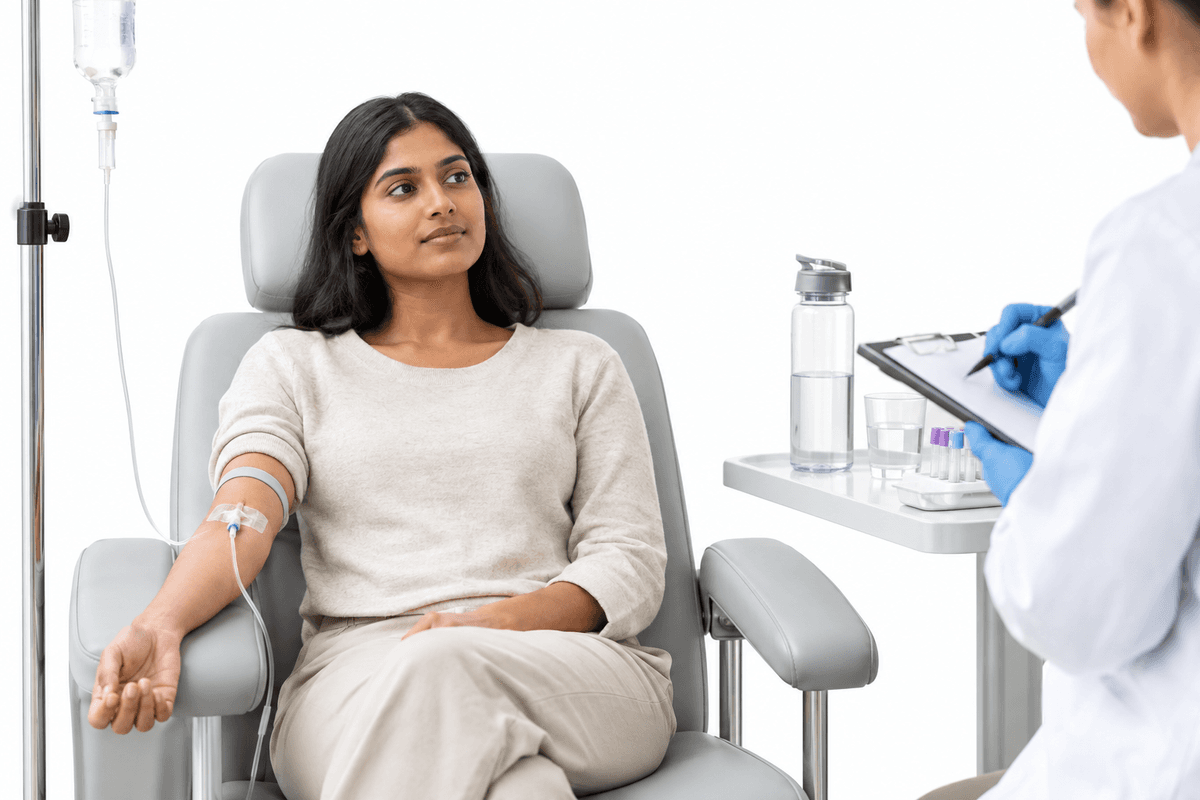
Performed by Dr. Kavya Jonnalagadda at Sree Charith Hospital
The Water Deprivation Test in Tirupati is a diagnostic procedure that evaluates the body's ability to concentrate urine and regulate fluid balance, primarily used to diagnose diabetes insipidus and other disorders causing excessive urination. This controlled test monitors urine concentration, volume, and blood osmolality while restricting fluid intake under medical supervision. Dr. Kavya Jonnalagadda at Sree Charith Hospital provides expert endocrinological assessment throughout this specialized diagnostic procedure.
We believe in honest, upfront disclosure so you can make an informed decision.
A step-by-step look at what happens during this procedure.
Initial measurements of body weight, blood pressure, urine osmolality, and serum osmolality are recorded to establish baseline values for comparison throughout the test.
Patient refrains from drinking any fluids while being monitored. Body weight, vital signs, and urine samples are collected hourly to track concentration ability and physiological response.
Regular urine osmolality measurements are performed every 1-2 hours along with plasma osmolality checks to assess kidney concentration capacity and hormonal regulation.
If urine fails to concentrate appropriately, desmopressin (synthetic ADH) is administered to differentiate between central and nephrogenic diabetes insipidus based on response.
Final measurements are taken and compared with baseline values. Results are analyzed to determine the diagnosis and appropriate treatment recommendations are provided.
A structured, patient-first approach from first consultation to full recovery.
Dr. Kavya Jonnalagadda conducts a thorough evaluation of your symptoms, medical history, and current medications to ensure the test is appropriate and safe for your specific condition.
Our endocrinology team at Sree Charith Hospital monitors you throughout the entire procedure, checking vital signs, weight, and hydration status every hour to ensure safety and prevent complications.
Our advanced laboratory provides rapid, accurate osmolality measurements using state-of-the-art equipment, enabling real-time assessment and timely decision-making during the test.
Dr. Kavya provides detailed explanation of your results, confirms diagnosis, and develops a personalized treatment plan addressing the underlying cause of your symptoms with follow-up care.
What to expect at each stage of your recovery journey.
You may resume normal fluid intake immediately after test completion. Mild thirst and dry mouth resolve within 1-2 hours of rehydration. Light meals are recommended initially.
Return to normal eating and drinking patterns. Any temporary fatigue or headache typically resolves with adequate hydration. Monitor urine output as advised by the medical team.
Results discussion appointment is scheduled within 2-3 days. Treatment plan is initiated based on diagnosis. Regular monitoring may be recommended depending on the identified condition.
The test reliably distinguishes between central diabetes insipidus, nephrogenic diabetes insipidus, and primary polydipsia, enabling precise diagnosis and appropriate treatment selection.
Results guide targeted therapy such as desmopressin for central diabetes insipidus or addressing underlying kidney issues in nephrogenic forms, improving symptom management.
Once the underlying cause is identified and treated, patients experience significant reduction in excessive thirst and urination, improving quality of life and daily functioning.
Early diagnosis through this test prevents long-term complications like chronic dehydration, electrolyte disorders, kidney damage, and cardiovascular strain associated with untreated conditions.
Let's clear up some of the most common myths about water deprivation test.
Get a personalised assessment from an experienced specialist. Understand your options, ask your questions, and decide with confidence.